


Maybe you haven’t been feeling very well lately. Maybe you’ve felt a little off. Maybe there have been some new symptoms or some that just seem to keep nagging at you no matter what you try to do on your own. Maybe there have been some scary incidences. Maybe some of them landed you in the emergency room or urgent care out of fear and desperation.
Maybe…that’s a whole lot of maybes.

We know our bodies. We know what our “normal” feels like because we’ve lived in our bodies our entire lives. When something isn’t right, and we run through all of the tools in our toolbox, we seek professional help. But what happens when you’ve been released from the emergency room with a pat on the head and discharge papers that read, “panic/anxiety attack?” What happens after you follow up with your primary and all the “routine” tests come back normal, and you’re dismissed without help with your symptoms yet again? What then?
There my friend, and fellow warrior, there is where you take your fear, and your anger, and your pain, and you learn how to become your own advocate.
Most of us know how to advocate for others. We intervene on behalf of friends, family, co-workers, and neighbors when we see an injustice unfolding. That feeling of helplessness ignites something primal and we get to work to right the wrong. But what about ourselves? Are we as quick to rally on our own behalf? Especially when we are going up against the experts, who are supposed to have the answers?
That’s when it can feel the most overwhelming for so many. It’s the fight-flight-or freeze moment, and many of us freeze. We are already exhausted from not feeling well, and all that goes along with that, and then the people who are supposed to know, who are supposed to help us when we are at our most vulnerable, can’t. Or worse…dismiss us.
So what are we to do?
We still have a problem that needs answering.
Self-advocating is just supporting yourself in your time of need, and listening to that inner intuition that says, “something isn’t right.” It’s setting you up for the best possible chance to get the answers you’re seeking. It’s about fighting for your health and well-being, and in some cases, maybe even your life. You are worth the fight. But it helps to know how to advocate for yourself.
Here are a few tips that I wish I would have known when I first started my journey in search of answers:
- Keep a symptom log/ journal.
- By keeping track of your symptoms, you can give your doctor quick and valuable access to information like duration, severity, diet-related, after an activity, etc. When you’re not feeling well, recall can be difficult, and this one little tool can be the difference between connecting the dots shortly, or it taking much longer.
- Keep a records folder.
- This is self-explanatory but often taken for granted early in the chronic illness journey. It can take a while to get in with specialists, and we all know our time with them is limited and hurried when they are in the room with us. Having your records on hand for quick review saves time, money, and the headache of lost record requests.
- By law (HIPAA) you are entitled to see and get copies of your medical records. There are a few exceptions, and you might be charged for them. But you absolutely have a right to ask, so make sure to check your local state statutes and laws for clarification.
- Learn about your family history, if you are able.
- The more information you can bring to your appointment, the better. Did grandma have a chronic illness? Is there a history of a relative maybe no one ever talked about? Now is the time to learn if you have access to it.
- Get multiple opinions.
- This is not a sprint, this is a marathon. And by that, I mean finding the right diagnosis for many can take years. I don’t say that to discourage you, I say it to help you strengthen your resolve. Remember you’re fighting for yourself, so don’t get discouraged. Physicians are human, they don’t always get it right. There are great practitioners out there, sometimes it just takes a little more time to find them or the correct diagnosis.
- Find a support system.
- This journey you’re on isn’t always easy, and it’s nice to have people in place who can empathize, understand, and hold space for you. There will be good days, and bad days, and all kinds of in-between days. Having a strong support system in place helps more than I can say.
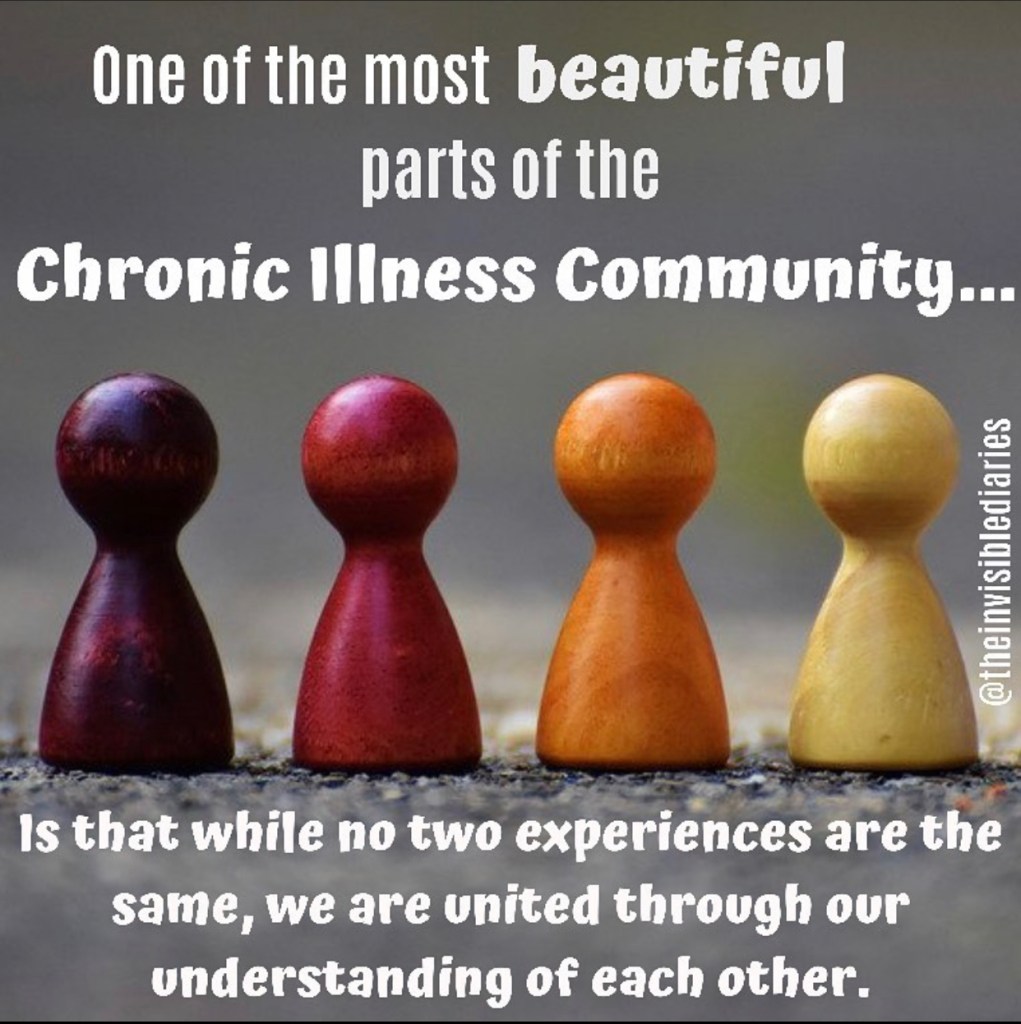
- Social Media is a great place to start. Facebook has a community group feature which is nice because of the privacy settings. Sometimes you want to be able to share, but also know that it stays inside the circle. Facebook fulfills that when you can’t find an in-person support group. Personally, Instagram helped me so much because of its searchable hashtag feature. I was able to find the #chronicillness community and for that, I will be forever grateful.
- My DM’s and email are always open. Please don’t hesitate to reach out and connect.
 Amber Marie